Open table
Here the cards lie face up. Once they are dealt there is little left to guess. You win by planning further ahead than your opponent.
How it works
Nothing hidden, still hard.
The cards lie face up in a layout. On your turn you take, play or move from it, and every choice changes what your opponent can do next.
With little hidden, these games reward looking ahead, as in chess. Near the end, the whole game can often be worked out exactly.
The question every turn: “If I take this, what does it leave for you?”
See it
The skills that win
Looking ahead
What do I leave behind, and what will they take from it?
Counting the endgame
Near the end, the whole game can be worked out exactly.
Weighing greed
A big grab now can hand your opponent a bigger one.
Short, tense and easy to learn, with no bad draw to blame.
The games in this family
Three games, each with its own twist
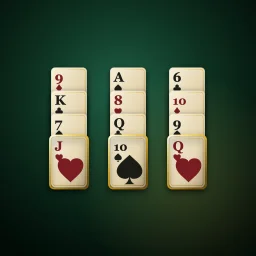 Nimbly SoloOn the App StoreTwo games of taking cards.
$2.99 · iPhone and iPadSee the game →
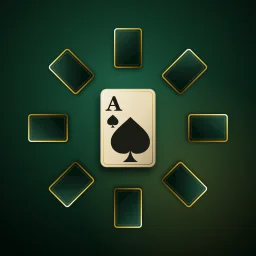 Yo-yo SoloOn the App StoreBuild up and down. Win the pile.
$2.99 · iPhone and iPadSee the game →
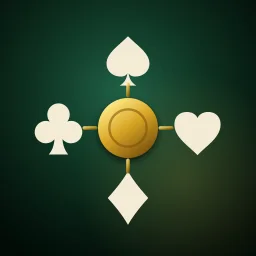 Overboard SoloOn the App StoreThe suit decides the move.
$2.99 · iPhone and iPadSee the game →
How they differ
| Game | Players | You aim to | The twist |
|---|---|---|---|
| Nimbly | 3 (Nimbly) or 2 (Abstrac) | Collect the cards that score best | Take only from the open ends of face-up rows |
| Yo-yo | 3 or 2 | Win the most cards | Get stuck, and the pile is yours |
| Overboard | 2 (you and a computer opponent) | Make the last possible move | Move the Tracker like a rook, bishop, king or knight |
Reference
Words you’ll meet
- Perfect information
- Every player can see every card that matters.
- Layout
- The cards dealt face up on the table to play from.