Grids
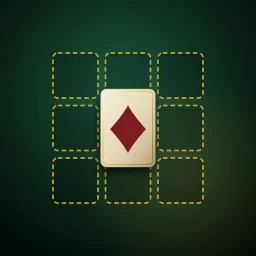
Cards are laid out in a square, and every card belongs to a row, a column and sometimes a diagonal. A card that helps one line can ruin another.
How it works
Every card counts more than once.
Cards go into a grid. Each line, across, down and diagonal, is judged on its own, so every card counts more than once.
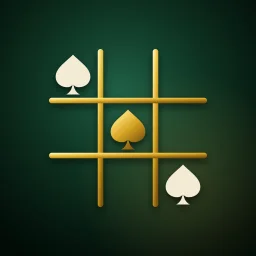
In Garbo you and your opponent build one shared square, and you avoid matches: a card in line with another of its suit or rank scores for your opponent.
The question every turn: “Does this card work across, and down, and diagonally?”
See it
The skills that win
Two-way thinking
Every placement is judged across and down at once.
Keeping options open
Leave gaps that can be filled more than one way.
Blocking
In a shared grid, the square you fill can spoil an opponent’s line.
Most card games happen in your hand. Grid games happen on the table, closer to a board game, while the deal keeps every game fresh.
The games in this family
Two games, each with its own twist
Reference
Words you’ll meet
- Line
- A row, column or diagonal of the grid, judged on its own.
- In line
- In Garbo, anywhere along the same row, column or diagonal, however far.